
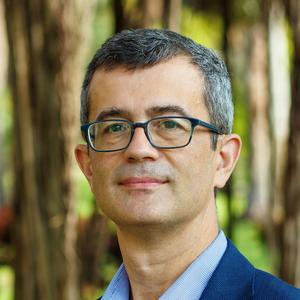
Burcin Bozkaya
Sr. Developer Relations Manager
NVIDIA Corporation
Dr. Burcin Bozkaya is a Sr. Developer Relations Manager at NIVIDA, enabling the AI ecosystem with GPU accelerated software stack, including NVIDIA cuOpt for open-source accelerated decision intelligence, NVIDIA inference microservices for GenAI and RAG, NVIDIA blueprints and more. Dr. Bozkaya holds a doctoral degree in Management Science from University of Alberta, Canada, specializing in combinatorial optimization problems and heuristic optimization. As the Developer Relations lead for decision intelligence, Dr. Bozkaya engages with the developer ecosystem to evangelize and support the open-source community, major optimization ISV partners and key business planners for developing and deploying accelerated optimization solvers.
Prior to joining NVIDIA, Dr. Bozkaya was a Professor and Director of Data Science at New College of Florida, Visiting Professor at MIT Media Lab, Professor of Business Analytics and Operations Management at Sabanci Business School in Istanbul, Türkiye, and co-founder and co-director of Behavioral Analytics of Visualization Lab at Sabanci University, co-founded with MIT Media Lab, and also took on administrative roles as Associate Dean at Sabanci Business School, Director of Sabanci MBA Program and Co-Director of Sabanci ITM Program. Dr. Bozkaya is an author of 50+ peer-reviewed academic articles in reputable journals such as Nature Communications, Nature Scientific Reports, Expert Systems with Applications and Computers & OR.
