Skip to content
Haitao Li
Haitao Li

Haitao Li

Professor
University of Missouri - St. Louis
Bio

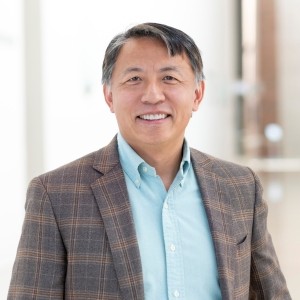
Haitao Li is Professor and Chair of the Supply Chain & Analytics Department, and Founding Director of Laboratory of Advanced Supply Chain Analytics (LASCA) at University of Missouri – St Louis (UMSL). Dr. Li’s research interests focus on optimization modeling, algorithm design, and their applications in the broad domain of supply chains, including supply chain network design, supply chain configuration, resource allocation, project scheduling and vehicle routing, among others. His research has been sponsored by the U.S. Department of Transportation, National Science Foundation, U.S. Army Research Office, as well as companies and organizations in the private sector including HP Labs, Express Scripts Inc., Ameren Corp., Cass Information Systems and Association of Supply Chain Management (ASCM). He was a recipient of the Douglas Durand Award for Research Excellence of UMSL in 2015. With two U.S. Patent applications and a number of invention disclosures, he was named 2015 UMSL Inventor of The Year, and 2025 Senior Investigator of The Year. Dr. Li currently serves as Associate Editor of Journal of the Operational Research Society and Transportation Journal, and Editorial Board member of International Journal of Project Management.


A Sensor-Enabled Decision-Support System for Safe, Efficient, and Sustainable Food Supply for All

Salmonella remains a leading cause of foodborne illness in the United States and globally, resulting in approximately 1.35 million infections, 26,500 hospitalizations, and 420 deaths annually, with an estimated economic burden of $3.7 billion in the U.S. Despite decades of prevention efforts, infection rates have remained largely unchanged, underscoring the need for integrated, data-driven solutions. As a complex One Health challenge spanning animal, human, and environmental systems, effective Salmonella mitigation requires convergence across disciplines, sectors, and technologies. Supported by the National Science Foundation’s Convergence Accelerator Program, our interdisciplinary team developed SENS-D, a cloud-based Sensor-Enabled Decision-Support System that integrates rapid pathogen sensing, real-time data acquisition, data visualization, predictive analytics, and prescriptive optimization.

A fundamental barrier to effective Salmonella control is fragmented data and the lack of holistic, end-to-end supply chain decision tools. SENS-D addresses this gap by combining primary and secondary data, real-time sensing, and advanced analytics within a unified, secure decision-support platform that enables actionable, real-time decision-support to improve food safety and optimize efficiency and sustainability across the food supply chain. Guided by a Convergence Science and human-centered design approach, the project engaged industry partners, subject-matter experts, and end users through interviews and focus groups to inform problem scoping, model development, performance metrics, validation, and impact assessment. Experimental studies demonstrate that SENS-D significantly improves testing efficiency and reduces operating costs compared with current practices, highlighting its potential as a transformational solution for pathogen control across multiple food sectors.

Professional / Leadership