
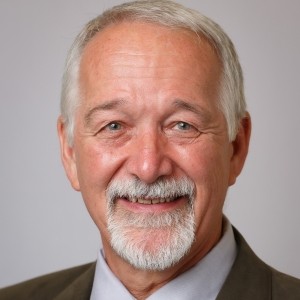
Tamás Terlaky
Alcoa Foundation Endowed Chair Professor, Lehigh University;
President and Co-Founder, Optamo LLC
Dr. Terlaky is the Alcoa Foundation Endowed Chair Professor at Lehigh University, and also President and Co-Founder of Optamo LLC, a start-up company specialized to optimize the business processes of large correctional systems.
Dr. Terlaky has published four books, edited over ten books and journal special issues and published over 240 research papers. Topics include theoretical and algorithmic foundations of mathematical optimization; nuclear reactor core reloading, oil refinery, VLSI design, radiation therapy treatment, and inmate assignment optimization; quantum computing.
Dr. Terlaky is Editor-in-Chief of the Journal of Optimization Theory and Applications. He has served as associate editor of ten journals and has served as conference chair, conference organizer, and distinguished invited speaker at conferences all over the world. He was general Chair of the INFORMS 2015 Annual Meeting, a former Chair of INFORMS’ Optimization Society, Chair of the ICCOPT Steering Committee of the Mathematical Optimization Society, Chair of the SIAM AG Optimization, and Vice President of INFORMS. He received the MITACS Mentorship Award; Award of Merit of the Canadian Operational Research Society, Egerváry Award of the Hungarian Operations Research Society, H.G. Wagner Prize of INFORMS, Outstanding Innovation in Service Science Engineering Award of IISE. He is Fellow of INFORMS, SIAM, IFORS, The Fields Institute, and elected Fellow of the Canadian Academy of Engineering.
