2025 WSC Opening Keynote
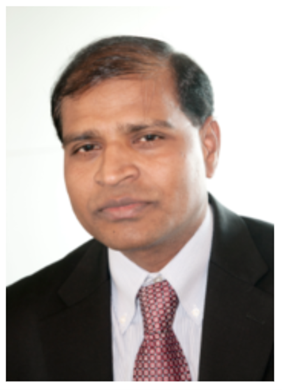
Ganesh Nanaware
Amazon
Model. Simulate. Innovate: Driving Amazon’s Fulfillment Design Through Simulation
This talk will explores how simulation serves as the digital backbone enabling innovation across Amazon’s fulfillment design and operations. We will discuss the mission of the simulation organization to virtually experiment, validate, and optimize complex fulfillment concepts before they are physically realized. As automation complexity grows, traditional design approaches face critical challenges in predicting system interactions, throughput impacts, and operational resilience. Simulation bridges this gap by offering a controlled yet high-fidelity environment to model, test, and refine designs at scale.. The talk will walk through a range of real-world applications of simulation across the end-to-end fulfillment ecosystem spanning site-level process design, automation system validation, network and traffic flow planning, and real-time digital twin development. We will highlight how simulation-driven insights are informing key design decisions, driving process innovation, and accelerating strategic initiatives across diverse site types and automation technologies.
Finally, we will reflect on the challenges and future vision for simulation to advance toward intelligent, adaptive models that mirror real-world operations in real time. Through this journey, we will see how simulation is not merely a design tool but a strategic enabler to innovate faster, smarter, and virtually, to build the fulfillment network of the future.
2025 Titan of Simulation
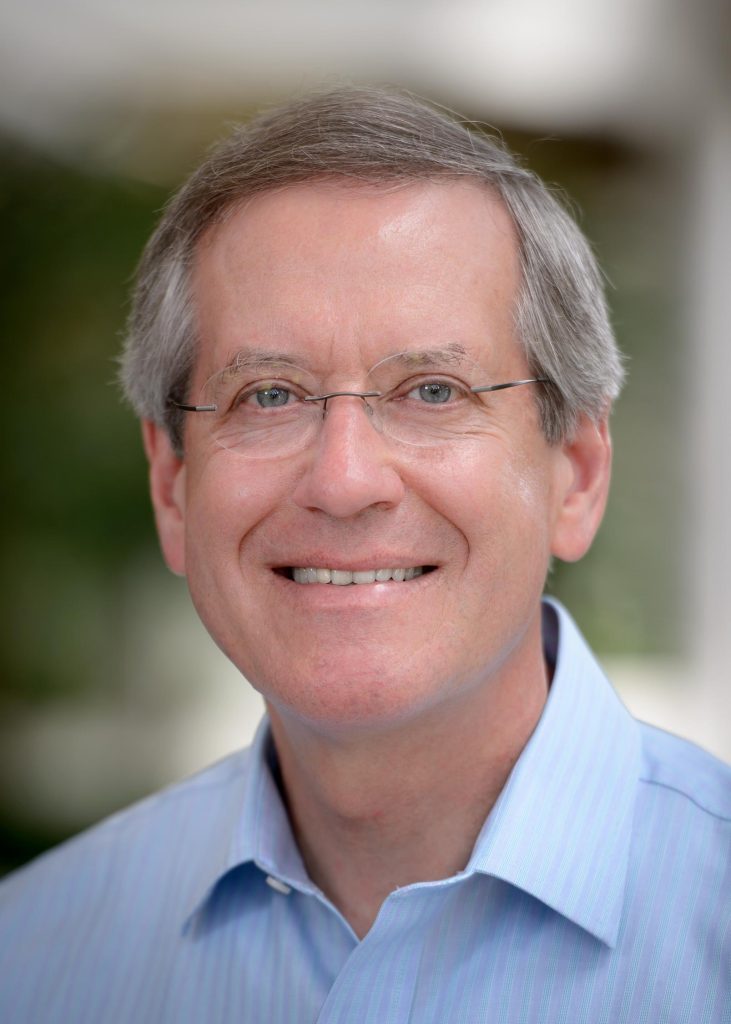
Charles M. Macal
Social Behavioral Systems, Group Leader
Argonne National Laboratory
Join Chick Macal for a keynote journey through simulation’s past, present, reflecting on its societal impact and asking the provocative question: Does simulation have a future in the Age of AI?
A Life in Simulation in the Service to Society, Past and Present – Does Simulation Have a Future?
Chick’s career has been a journey through the evolution of simulation, from the early days of digital computing to today’s advances in agent-based modeling, digital twins, and AI. Over more than five decades, he has witnessed simulation grow from its foundations in discrete-event models and system dynamics into a vital discipline for science, engineering, and decision-making. Chick’s focus has been applying simulation to problems of societal importance—public health, energy, and critical infrastructure.
In this Titans talk, he will reflect on milestones and influences that shaped both his career and the broader field, while also looking ahead. Will simulation remain central in an era dominated by AI? Can we inspire new generations to carry the field forward? Chick will argue that simulation’s future depends on how we innovate, integrate with emerging technologies, and continue to demonstrate its indispensable role in service to society.
2025 Titan of Simulation
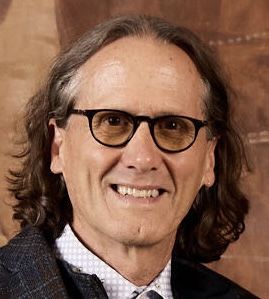
Matthew Hobson-Rohrer
Roar Simulation
How I Learned to Make a Living Building Models (And Why I Swear I’m Not Just Playing Video Games)
Matt Hobson-Rohrer’s career is a masterclass in simulation technology. He’s held nearly every role possible: he built models for a decade, developed software, managed consulting teams, and eventually ran the entire AutoMod business. For 20 years with AutoMod, he climbed the ladder, later moving into business development to help Emulate3D and SIMUL8 grow their North American presence.
Today, Matt’s company, Roar Simulation, builds sophisticated digital models of material handling automation to help clients “eliminate risk” before physical systems go “live”.
After 37 years in the industry (which he insists is a legitimate job, not just playing Fortnite), Matt has some hard-won lessons to share with the WinterSim community. He will offer insights on the core principles we need to preserve as the field evolves, and his unfiltered perspective on what we should change.
2025 Simulation in Space Keynote
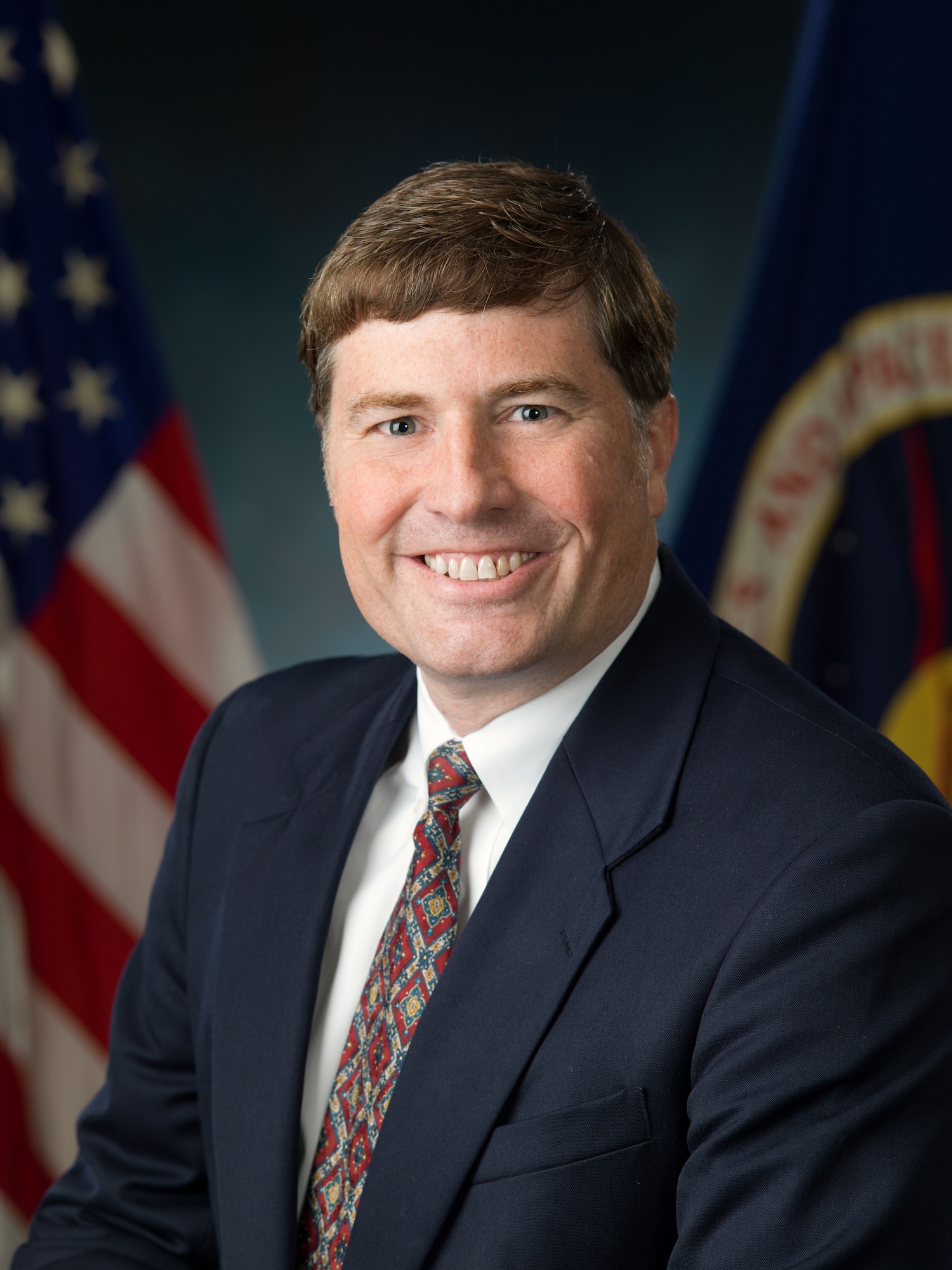
Michael McFarlane
NASA
The Unique Challenges Associated with Building Useful Space-Based Simulations
The National Aeronautics and Space Administration (NASA) has faced incredible challenges throughout its history associated with flying humans in space safely and efficiently. NASA has relied heavily on modeling and simulation products to prepare for these missions and the challenges that must be overcome accordingly. However, building accurate models and simulations of complex vehicles in outer space, on the Moon, or on other astronomical bodies is especially challenging because of the uniqueness of those environments, which includes reduced gravity, intense and immediate temperature shifts, challenging radiation levels, high-contrast lighting challenges, and several other factors. Adding to the difficulty is the fact that, in general, space missions must be fully successful the first time they are flown. Unlike many industries that can afford to build and test numerous concepts and test articles through a series of successes and failures, space missions are simply too expensive and too hazardous to fail, especially human missions. “Failure is not an option” is an oft-repeated slogan associated with human space missions, and for good reason. As a result of these challenges, NASA has invested significantly in building modular, reusable simulation products that have been shared across multiple programs, thereby providing extensive use-history and reusable validation data, which ensures high quality while keeping costs down. These tools include a core simulation environment (Trick), an orbital dynamics package (JEOD), a multi-body dynamics package (MBDyn), and countless other tool suites designed to reduce the workload associated with simulating new vehicles in new space-based environments. Many of these tool suites have been released as open-source projects, others have not for a variety of reasons. NASA has also relied heavily on international standards where they exist, including High Level Architecture (HLA), an IEEE standard, and SpaceFOM, a SISO standard. These standards have ensured that we can build interoperability into our simulations without requiring our partners (domestic or international) to all use the same suite of simulation tools. We also seek out commercial simulation solutions wherever possible. There are excellent commercial visualization tools available, but commercial tools that model the complexities of space to the extent needed to ensure mission success are fairly limited. This presentation will explore some of the history of modeling and simulation at NASA, how those capabilities have been used to ensure mission success, how human space flight has evolved in its development and use of these simulation capabilities, future challenges that will almost certainly rely heavily on the current suite of simulation tools, and new innovations that will hopefully come to pass in the future.
MASM Keynote
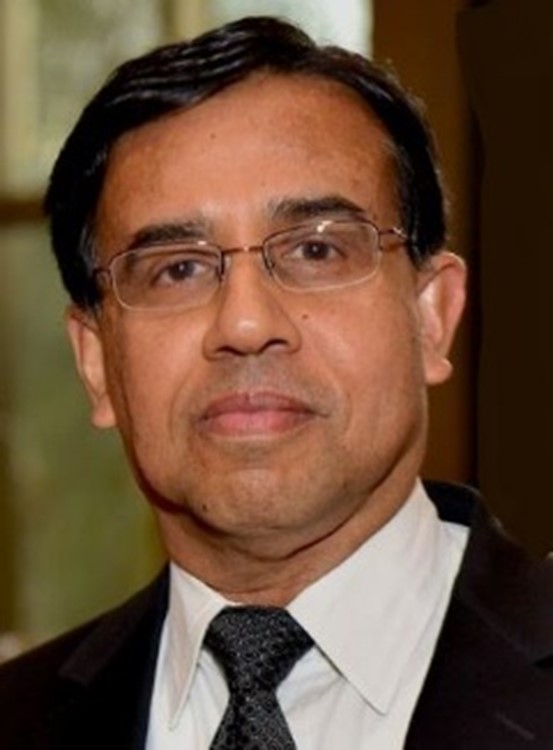
Devadas "Dave" Pillai
Intel
Beyond Digital Twins, Using Content-rich Agentic Models to Drive New Breakthroughs in Tomorrow’s Factories
The future of leading-edge manufacturing demands innovations that generate real benefits for the business at a pace and scale we have never seen before. This talk will discuss major forces underway shaping manufacturing’s future, transitioning from digital-twins to being increasingly driven by agentic and multi-model solutions that enable full-autonomy and augmented intelligence-based decision support systems in the factory. Their foundations require highly dependable, content-rich, and collaborative environments that can sense, perceive, reason, plan and execute complex production decisions safely around the clock. And as business drivers change, these capabilities must adapt and stay available and resilient, while being extended and scaled out quickly. The talk will outline how these tools are moving from being advisory in nature to the next frontier of execution by objectively characterizing complexity and disruptions autonomously and creating runways that unlock entirely new levels of agility and productivity that manufacturing demands.