2026 WSC Opening Keynote
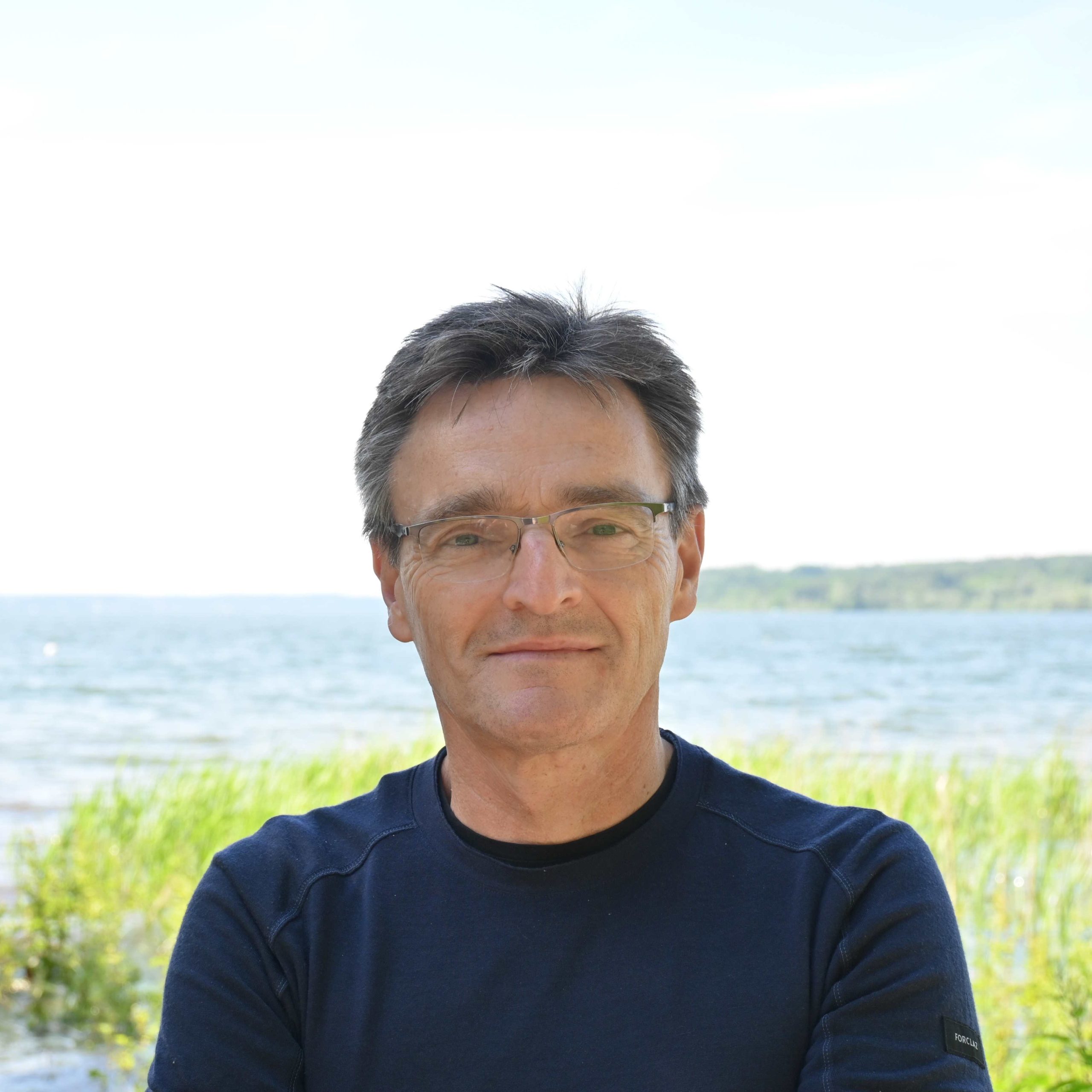
Ralf Ludwig
LMU Munich
Why Scenarios? Using Simulations for Perspectives on Hydroclimatic Futures between Utopia and Dystopia
Climate scenarios are structured representations of possible future climate conditions based on assumptions about greenhouse gas emissions, socio-economic development, and technological pathways. They form the backbone of modern climate resilience research, enabling systematic exploration of how hydroclimatic extremes — including floods, droughts, heatwaves, and compound events — may evolve under alternative futures. Such scenario-based simulations are indispensable for anticipating risks, supporting adaptive planning, and guiding sustainable water resources management in a non-stationary climate.
Yet, generating robust and decision-relevant hydroclimatic projections remains a grand computational challenge. High-resolution, process-based Earth system, regional climate, and hydrological models must be coupled across scales, often through large ensemble frameworks to sample internal variability and scenario uncertainty. This leads to massive computational demand, requiring High Performance Computing (HPC) infrastructures capable of handling petabyte-scale data streams, sub-kilometer-scale grid resolutions, and long transient integrations. HPC thus becomes not only a technical necessity, but a scientific enabler, allowing the representation of extremes, feedbacks, and cross-system interactions that are critical for resilience assessments.
Beyond traditional simulation paradigms, the presentation explores the emerging role of physics-aware AI. By embedding physical constraints into machine learning architectures, these hybrid approaches accelerate surrogate modeling, improve downscaling, detect compound risk patterns, and help identify non-linear regime shifts that may remain hidden in classical analyses. Rather than replacing process understanding, physics-aware AI augments it — opening new avenues for scenario discovery, uncertainty quantification, and rapid exploration of “what-if” futures.
The talk introduces the conceptual foundations of hydroclimatic scenarios and demonstrates their relevance for integrated water resources management through contrasting best-case and worst-case examples from North America and Europe. Framing futures between utopia and dystopia, it argues that advanced simulation ecosystems — combining HPC and physics-informed AI — are central to turning climate scenarios into actionable resilience knowledge.
2026 Titan of Simulation
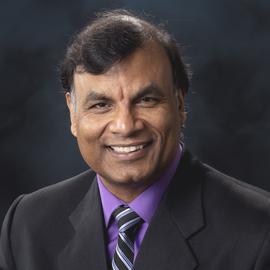
Kalyan Perumalla
Vipra Computing Labs Inc
Weathering the AI, Quantum, and other Tsunamis Hitting the Shores of Modeling and Simulation
The current computational landscape is arguably unlike any seen in recent decades, with the emergence and confluences of high-performance computing (HPC), quantum computing and networking, algorithm design, generalized models, and eye-catching software engineering automation. Supercomputing or high-performance computing, once limited to niche conversations, are now everyday terms with daily news on massive computing or data centers and their associated resources. The renewed attention to the immense potential of quantum technologies has brought them to the top echelons of scientific investments across countries. Efforts and advancements in quantum computing and networking are unraveling new frontiers in the definition and feasibility of modeling, simulating, and controlling some of the most fundamental physical processes. Operations Research is poised to undergo sea changes, under recently disruptive advancements in algorithm design, such as AlphaEvolve and similar services. The massive efforts underway around the world towards the goal of a so-called “artificial general intelligence” are challenging the very raison d’être of classical modeling and simulation. Software engineering is at an especially noteworthy inflection point from the emergence of natural, spoken English (or human language) as the new coarse-grained control-panel to many levels of human-computer interfaces, including traditional computer programming. Real-life, lifesaving and life-enhancing applications are emerging as potential beneficiaries of the cumulative and synergetic progress that these advancements offer; these applications include Scientific Discovery in Physical Sciences, Earth Systems Modeling, and Drug Discovery, to name a few. Nevertheless, there remains an immense volume of unknowns as the landscape transitions from euphoria to lasting feasibility, deeper scientific comfort, and resource-effective realization. We will examine some of the rapid advancements, efforts, challenges, and unprecedented opportunities with which the global scientific community is being presented, along with our perspectives on ways the modeling and simulation community may adapt to weather this set of simultaneous tsunamis to effectively transform itself.
2026 Titan of Simulation

Susan Howick
Strathclyde Business School
Better Together: Reflections on the Use of Hybrid simulation/Hybrid Modeling
The theme of the conference is Climate Change resilience. To tackle such a grand challenge, multiple disciplines, including multiple types of modelers, need to work together. However, it is not just climate change where this approach can be beneficial. Simulation modellers can benefit from working with other types of modellers when tackling many different types of complex issues. For this reason, there has been growing interest in using multiple types of simulation together (hybrid simulation) and also using simulation alongside other modeling methods (hybrid modeling). Over the last 30 years Susan has been involved in a range of hybrid simulation/hybrid modelling projects in healthcare, engineering, construction, energy and public sector. In this talk she will reflect on her experiences and consider how hybrid simulation/hybrid modeling can support understanding as part of a modeling process. In doing so, she will highlight benefits, challenges and areas for future work.
PhD Colloquium Keynote
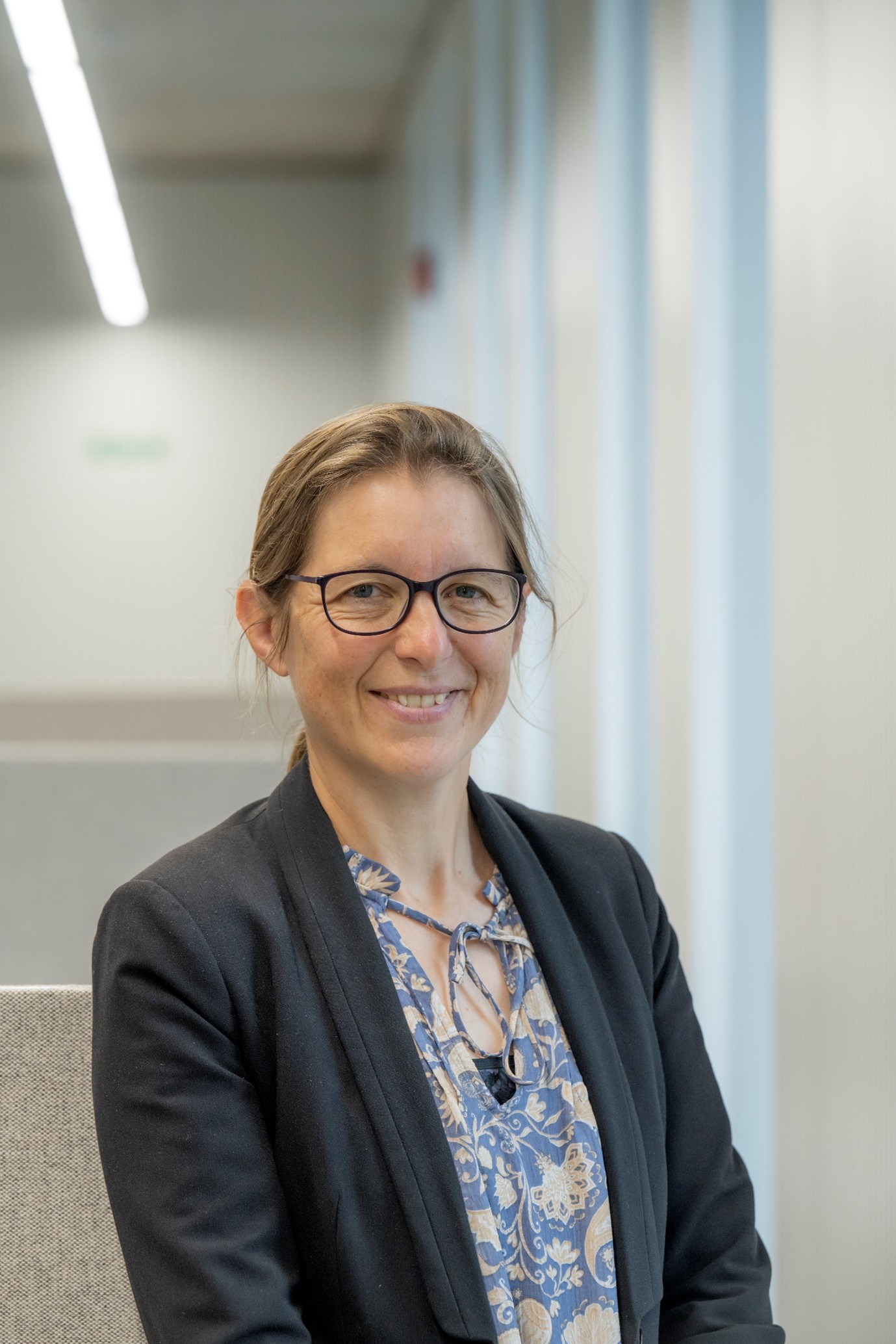
Christine Currie
University of Southampton
Simulation at Speed: Decision‑Making in a World of Digital Twins and AI
Simulation analytics, data-driven modeling and digital twins combine the two worlds of traditional simulation and machine learning, enabling simulation to be used in real-time operational decision-making. Quick decisions require fast optimization methods and advances in simulation optimization have enabled many of these new developments, pulling in ideas from reinforcement learning and deterministic optimization. The concept of good-enough rather than optimal also becomes important when working in real-time. This talk will use case studies to describe how simulation research is moving towards real-time decision-making and what this means for the application of simulation to practical examples. It will also, dangerously, give some suggestions of potential future directions for simulation in a world run by Artificial Intelligence.
MASM Keynote
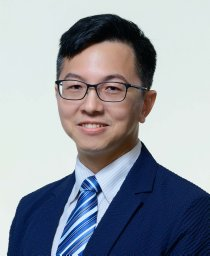
Chia-Yen Lee
Taiwan University
Manufacturing Data Science: From Operationally Predictive to Strategically Prescriptive Analytics
This talk introduces smart manufacturing as a multi-objective, decision-oriented system that leverages computational intelligence and self-learning mechanisms to autonomously optimize manufacturing resources and processes. Beyond intelligent manufacturing systems (IMS), this talk proposes manufacturing data science (MDS) to complement smart manufacturing, bridging the transition from operationally predictive to strategically prescriptive analytics. The talk identifies common pitfalls and protocols of data science in manufacturing practice. In particular, a Five-Phase Analytics framework is proposed to provide a roadmap for methodological development. The framework focuses on creating synergy by filling the gap between predictive and prescriptive analytics, and emphasizes ‘Prediction is a Process, Decision is the Purpose’ to support proactive and autonomous decision-making. Several empirical studies in semiconductor manufacturing are presented, spanning operational enhancements—such as cyber-physical systems, chiller energy conservation, and defect image denoising—to strategic initiatives, including raw material price forecasting & procurement, product cycle time prediction, and robust capacity planning. Finally, Optimization-Guided Learning (OGL) is introduced to bridge the “valley of death” between predictive and prescriptive analytics, enhancing decision robustness in an analytics loop.
Military Keynote
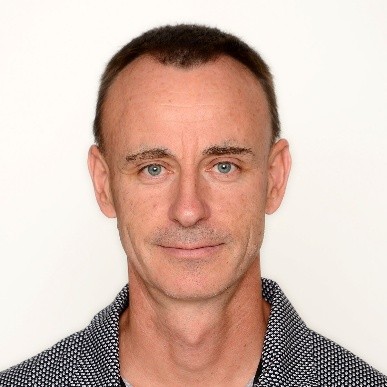
Jan Hodicky
NATO Allied Command for Transformation
Evolving NATO Modeling & Simulation: Integrating Wargaming, Operational Analysis, and AI for Multi-Domain Operations
As NATO adapts to the growing complexity of Multi-Domain Operations (MDO), its Modeling and Simulation (M&S) community faces a pivotal transformation. This keynote explores how the emergence of MDO is driving a new level of complexity in M&S requirements, demanding tighter integration across traditionally distinct disciplines such as wargaming, operational analysis, and artificial intelligence. It will highlight how NATO is responding today, through structured programs of work, capability development initiatives, and technology foresight, while preparing for the next generation of M&S capabilities. Concrete use cases will illustrate this evolution: from cognitive concept validation at the tactical level, to urban multi-domain scenario analysis at the operational level, and simulation-supported political-military decision-making at the strategic level. The role of AI in enhancing the M&S analytical lifecycle will also be examined.
In line with the conference theme, the keynote will highlight how climate change is reshaping operational planning and resilience, using a multinational example to show how M&S supports preparation for disruptions such as extreme weather impacts on force readiness.