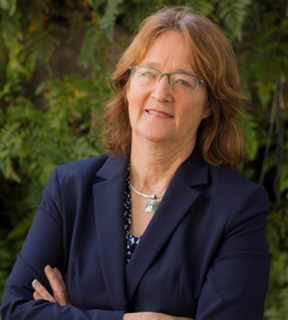
Margaret Brandeau
Operations Research and Social Policy: Models that Can Make a Difference
The United States faces numerous complex, intertwined social challenges such as rising income inequality, lack of access to healthcare, lack of affordable housing, homelessness, opioid addiction, and mass incarceration. How can OR inform good policies for addressing these and other social problems? Decision makers deciding which programs to invest in face a number of challenges, including limited resources, incomplete information about the potential effects of programs, and objectives that include not only welfare maximization but also economic, social, and political considerations. This talk describes modeling efforts in which OR has played and can play a role in informing such decision making. By providing a structured framework that uses the best available evidence, imperfect as it may be, and that captures relevant uncertainties, complexities, and interactions, OR-based models can be used to evaluate the potential impact of alternative public programs. We describe models focusing on opioid, housing, and criminal justice policies. We conclude with a discussion of useful lessons and opportunities for OR modelers who wish to work on problems related to social policy.
MONDAY, OCTOBER 27, 9:45-10:45AM
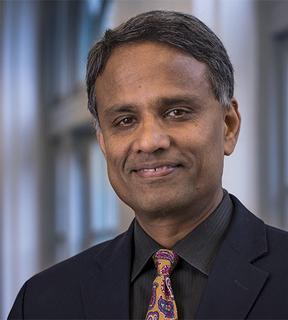
RAMAYYA KRISHNAN
Two Heads Are Better Than One Redux: AI, OR/MS, and Society
In 1986, Nobel Laureate Herbert Simon delivered the TIMS/ORSA Joint National Meeting plenary titled “Two Heads Are Better Than One: The Collaboration between AI and OR”. Close to 40 years later, we are seeing the rapid development of AI technologies opening up dramatic new opportunities for synergistic collaboration between AI and OR/MS. From large language models to large reasoning models, from Gen AI for text to multimodal AI, and from chatbots to agentic AI, these technologies are important additions to our decision analytic and technology toolkits. However, adoption has been lagging due to a significant gap in understanding how to evaluate these technology artifacts and guide their deployment into workflows and systems to support consequential decision making. In this plenary talk, I posit the need for two types of synergistic collaboration to advance the science of measurement and evaluation required to achieve this objective. The first synergy opportunity – OR for AI (ORFAI) – is required to enable dynamic, multi-criteria analysis and evaluation of AI artifacts (e,g,. LLM models, agents) as “systems”. The second – OR/AI for Societal Systems (ORAIS) – harnesses AI and OR/MS in consequential scenarios and workflows, and evaluates the implications of such deployment for workers and their reskilling/upskilling. I will discuss the need for robust evaluation infrastructure that will leverage this desired synergy between OR/MS and AI, and the significant implications for education, business and public policy.
TUESDAY, OCTOBER 28, 9:45-10:45AM
Eric Phillips

Pete Buczkowski
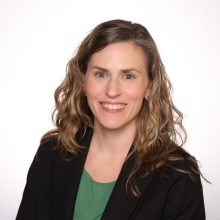
Amanda Bramlett
Delta at 100: Harnessing a Century of Insight to Power the Future of Travel with AI
As Delta Air Lines celebrates its centennial year, we reflect on a century of transformation fueled by data, innovation, and a deep commitment to customer experience. From early operational metrics to today’s real-time, AI-powered decision-making, Delta’s journey highlights how data and insights have continually shaped our strategy and elevated our brand. This session explores how Delta’s digital and AI evolution is not a recent shift, but a natural extension of our longstanding focus on operational excellence and customer-centricity. AI is now embedded across our enterprise—from optimizing crew and aircraft scheduling to delivering personalized, real-time support through the Fly Delta app and emerging tools like Delta Concierge.
These capabilities are redefining how employees embody Delta’s values, how we manage global operations with precision, and how we create seamless, tailored experiences for over 200 million customers annually.
Attendees will gain insight into how Delta is leveraging AI to:
- Enhance operational reliability through predictive analytics.
- Empower employees with intelligent tools that streamline service.
- Drive loyalty through hyper-personalized engagement strategies.
- Build a scalable digital platform that connects data, people, and purpose.
Join us to discover how Delta’s century of experience is powering the next era of intelligent, human-centered air travel.
Fireside Chat: AI in Action—Transforming Operations and Customer Experience at Delta Air Lines
Join us for an engaging panel discussion with two of Delta’s leading minds shaping the future of aviation through data and artificial intelligence:
- Pete Buczkowski, Managing Director – Operations Digital and Decision Science.
- Amanda Bramlett, Director of Data Science, driving personalization and customer experience innovation.
- In this session, you’ll hear firsthand how Delta is leveraging AI and advanced analytics to deliver operational intelligence at scale, from predictive maintenance to real-time crew scheduling and more. Discover how automation and human judgment work together to keep flights safe, on time, and customer-centric—even in the face of disruptions.
- The panel will also explore the evolving skillsets needed for success in aviation data science, offering practical advice for job seekers and insights into how Delta fosters collaboration between technical teams and frontline employees to ensure AI solutions remain truly human-centered.
- Whether you’re an industry professional, aspiring data scientist, or simply passionate about the future of travel, this conversation will provide actionable takeaways and inspiration for the next generation of AI leaders.
-
WEDNESDAY, OCTOBER 29, 11AM-12Noon
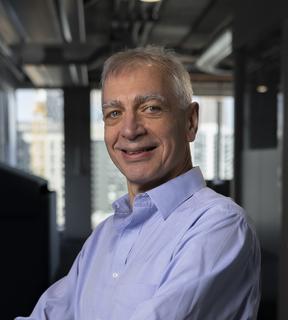
Pascal Van Hentenryck
Learning to Optimize: Foundations and Industrial Impact
In many industry settings, the same optimization problem is solved repeatedly for instances taken from a distribution that can be learned or forecasted. Indeed, such parametric optimization problems are ubiquitous in applications over complex infrastructures such as electrical power grids, supply chains, manufacturing systems, and transportation networks. The scale and complexity of these applications, and increasingly volatile environments they operate on, have grown significantly in recent years, challenging traditional optimization approaches. This talk studies how to fuse machine learning and optimization for speeding up these parametric optimization problems and meeting real-time constraints present in practice. It first reviews the concept of optimization proxies that learn the input/output mappings of parametric optimization problems, computing near-optimal feasible solutions and providing quality guarantees orders of magnitude faster. The talk also presents how to “learn to optimize” highly complex optimization problems, fusing optimization methodologies with supervised learning and reinforcement learning. The impact of the methodologies are highlighted on industrial problems in grid optimization, end-to-end supply chains, logistics, and transportation systems. The talk should reveal beautiful connections between machine learning and optimization, that leverage fundamental theoretical results to push the practice of optimization.
Keynotes
SUNDAY, OCTOBER 26, 5:45-6:35PM
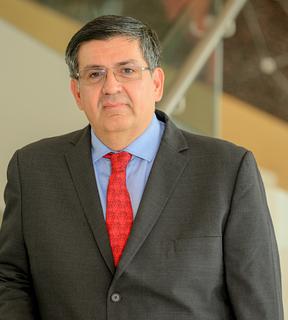
Carlos A. Coello Coello
GWCC Building B Level 2 B206
IFORS Distinguished LECTURE
40 Years of MultiObjective Evolutionary Algorithms: Past, Present, and Future
The first multiobjective evolutionary algorithm was proposed in 1985 by David Schaffer (in the USA). Since then, this research area has become increasingly popular and has generated an important number of publications and PhD theses. In this talk, I’ll give a quick overview of the historical development of this discipline, including some of the recent research topics that are attracting interest as well as some of the areas in which more research is expected in the future.
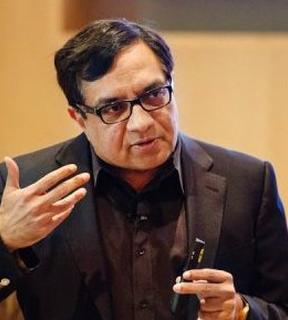
Sridhar Tayur
GWCC Building A Level 4 A411
How can INFORMS contribute to The Second Quantum Revolution?
The Second Quantum Revolution – comprising of Quantum Computing, Quantum Communications and Quantum Sensing – provides unprecedented abilities to improve the human condition, security and sustainability, hence mass prosperity, across the world, in a variety of ways, ranging from improving health (through better diagnosis as well new drug development, via exciting applications of Quantum Machine Learning and Quantum Sensing) as well by improving security (in financial transactions as well as better combat cyber-attacks on critical infrastructure, through Quantum Money and Quantum Communication protocols). It also promises to do so using less energy than purely digital methods, thus providing a sustainable approach to sustainable development in a hybrid quantum-classical future.
Integer Programming. Queueing. Markov Decision Processes. Semi-definite Programs. These are some of fundamental methodologies in Operations Research (O.R.) and Management Science (MS) that are used to tackle practical applications from Business (Supply Chain, Finance), Engineering (Communication Networks) and Medicine (Cancer Genomics, Image Recognition). At Tepper Quantum Group, we are exploring the twin questions: (a) what can quantum do for OR/MS and (b) what can OR/MS do for quantum.
In this talk, after a brief introduction to the relevant topics in quantum mechanics, I will present an overview of our progress in (a) Graver Augmented Multi-seed Algorithm (GAMA), a novel hybrid quantum-classical algorithm, for non-linear integer programs, with application to hedge funds, cancer genomics and supply chains; (b) Ising Hardware (Photonics); (c) Queuing analyses for quantum communications (buffering, entanglement switch) and (d) tackling fundamental problems in Quantum Information Science (QIS), such as entanglement detection, via SDP. I will also highlight two TutORials that we have created to help INFORMS community rapidly become familiar with quantum computing and information science. It is my hope that this plenary will create collaboration opportunities in identifying new applications, building novel hardware or conceiving innovative algorithms utilizing, and enhancing, quantum information science and technologies, facilitating INFORMS to contribute to The Second Quantum Revolution.

Georgia Perakis
GWCC Building A Level 4 A412
Optimization, ML and AI in Operations Management
Data-driven decision-making has garnered a growing interest due to the increase in data availability in recent years. The growth of AI has further accelerated this growth. With that growth, many opportunities as well as challenges arise. In this talk, we will discuss some of these opportunities and challenges as well as many applications in Operations Management. We will highlight the importance and challenges of integrating optimization with ML in data-driven decision-making as well some concrete examples of these synergies. For example, we will discuss how we can optimize over already trained objective functions that arise either from tree ensemble predictive models or from neural network models in order to recommend better decisions.
MONDAY, OCTOBER 27, 5:45-6:35PM
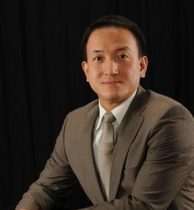
YENTAI WAN
GWCC Building A Level 4 A412
The UPS Advantage: Integrated Network Powered by O.R. & AI
On a typical day, UPS delivers 22.4 million packages and documents to 10.1 million customers and collects packages from 1.6 million shippers. In 2024, it achieved total revenue of $78 billion with 444,000 employees worldwide. UPS operates in more than 220 countries and territories with approximately 1,800 owned or leased facilities. To serve in a high-premium complex logistics customer base, it leverages a fleet of 291 aircraft it owns and another 243 it charters. UPS operates one of the world’s largest civilian airlines, using 734 airports throughout the world. In addition, approximately 135,000 package cars, vans, tractors and motorcycles, including more than 19,000 alternative fuel and advanced technology vehicles are used to achieve marketing leading customer service.
UPS has a rich history of operational excellence and is steeped in a culture of technology innovation. Any researcher will quickly notice the reference of operations research (O.R.) in UPS could dating way back to the 1950s and most recently, the 2016 Franz Edelman Award winner, ORION that optimizes final mile deliveries. In this talk, we will unveil the curtain of the first and middle-mile UPS network with its unique challenges and opportunities. More importantly, how UPS applies O.R. with supplemental AI innovations to dynamically scale our networks in a highly uncertain business environment.
Sponsored by: AIMMS

National university of Singapore
GWCC Building B Level 2 B206
UPS George D. Smith Prize Winner Reprise: National University of Singapore
Established in 2013, the Business Analytics Centre (BAC) at the National University of Singapore (NUS) is a result of a collaborative effort between NUS and IBM. The Centre is the operational hub for the NUS Master of Science in Business Analytics (MSBA) program, fostering applied research in business analytics through strong industry partnerships. The MSBA program, shaped and executed with NUS’s academic expertise, benefits from IBM’s industrial insights, integrating theory with real-world application.
As an analytics hub at NUS, the BAC leverages the strengths of both the NUS Business School and the School of Computing. Over the past decade, BAC has established a robust industry network with over 100 partners, including leading multinational corporations like Accenture, Alibaba, Amazon, AXA, DBS, Ernest & Young, Google, Huawei, IBM, Johnson & Johnson, Morgan Stanley, SAP, State Street, Swiss Re, and dynamic unicorn startups such as Ant Financial, Grab, Shopee, TigerGraph, and TikTok.
These collaborations extend into educational initiatives and translational research, enhancing the practical learning experience for students. Remarkably, over 800 real-world industrial analytics/OR projects have been successfully completed by NUS MSBA students in partnership with these corporations in the past 10 years. Furthermore, BAC has cultivated an engaging alumni community of MSBA graduates, who continue to contribute to and enrich the business analytics landscape at NUS.
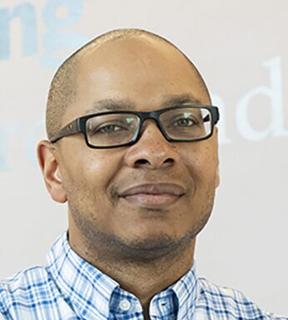
Moderator
Mark Lewis
GWCC Building A Level 4 A411
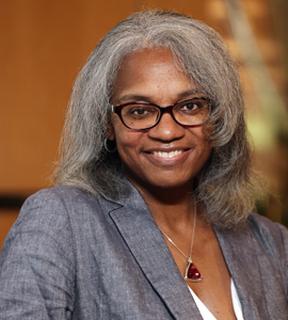
Julie Ivy
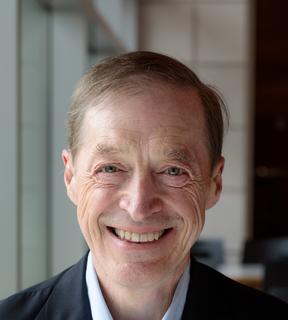
JOHN BIRGE
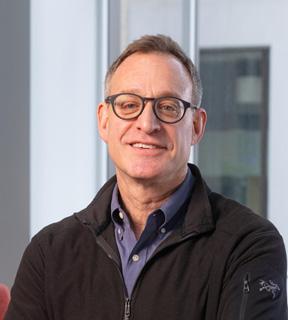
Phil Kaminsky
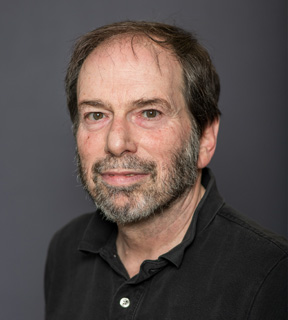
David Shmoys
INFORMS Fellows Panel – OR/MS in an Ever-Evolving Environment: Perspectives from INFORMS Fellows
The INFORMS Fellows represent a set of community leaders from a broad swath of INFORMS members. Come hear from some of these leaders in our field about what they view as the current and future of OR/MS. We have gathered four INFORMS Fellows with broad range of experience and knowledge for a panel discussion. Topics may include:
- AI in teaching, publishing
- Connections between industry/academia
- Reduced access to federal funding
- The most interesting research directions in…optimization, stochastics?
- What tools will be the most useful for students in supply chain, health care, finance, service systems?
TUESDAY, OCTOBER 28, 5:45-6:35PM
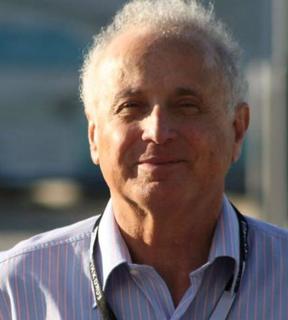
Andres Weintraub
GWCC Building A Level 4 A411
OMEGA-RHO LECTURE
O.R. and AI Tools Support Forest Fire Prevention Decisions
Climate change has made forest fires more frequent and destructive. Increasingly preventive measures, taken before fires start, are becoming essential. In particular, fuel management, like fire breaks, where areas that allow fire to spread are cleared out to stop or delay the advance of fires. This Omega Rho Distinguished Lecture will describe AI and O.R. tools we have developed to support fire prevention decisions. The extremely high uncertainty in fire ignitions and spread require complex approaches. Particularly challenging problems are how to detect and prevent intentional fires and how simulation and optimization models support decisions on where firebreaks are more effective in stopping the growth of megafires.

USA Cycling
USA Cycling
GWCC Building A Level 4 A412
2025 INFORMS franz edelman award REPRISE
Project 4:05 — Optimizing Olympic Gold Medal Performance for USA’s Women’s Team Pursuit
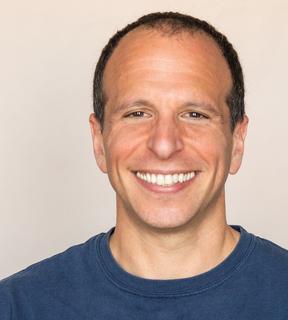
Ben Recht
GWCC Building B Level 2 B206
The Irrational Decision: How We Gave Computers the Power to Choose for Us
This talk traces the intellectual history of automated decision-making to its origins in the post-World War II development of computers. Mathematicians of the 1940s set out to design machines that could act as ideal rational agents in the face of uncertainty. In this pursuit, a cluster of foundational mathematical technologies—including linear programming, game theory, and neural networks—emerged as a foundation for a mathematical rationality, which changed how we think about human decision-making itself.
As the operations research community knows, these seminal computational methods have grown into a robust discipline and industry with countless success stories. I’ll describe several such successes in accelerating computers, regulating pharmaceuticals, and deploying electronic commerce. These examples will highlight how automated decision systems excel in specific sweet spots with clear rules, well-defined goals, and well-constrained contexts.
However, most of life, for better or for worse, doesn’t fit into neat mathematical models. Even in our data-driven world, we make decisions based on values, emotions, and incomplete information that can’t be reduced to optimization problems. I will thus close by exploring how to best harness eighty years of unfathomable computational progress while preserving human agency and judgment.
